Infrared Thermography Services
See What Others Miss — Certified Infrared Thermography Inspections
Non-contact thermal imaging identifies heat anomalies, failing components, and safety hazards in electrical and mechanical systems before they cause downtime, fires, or injuries.
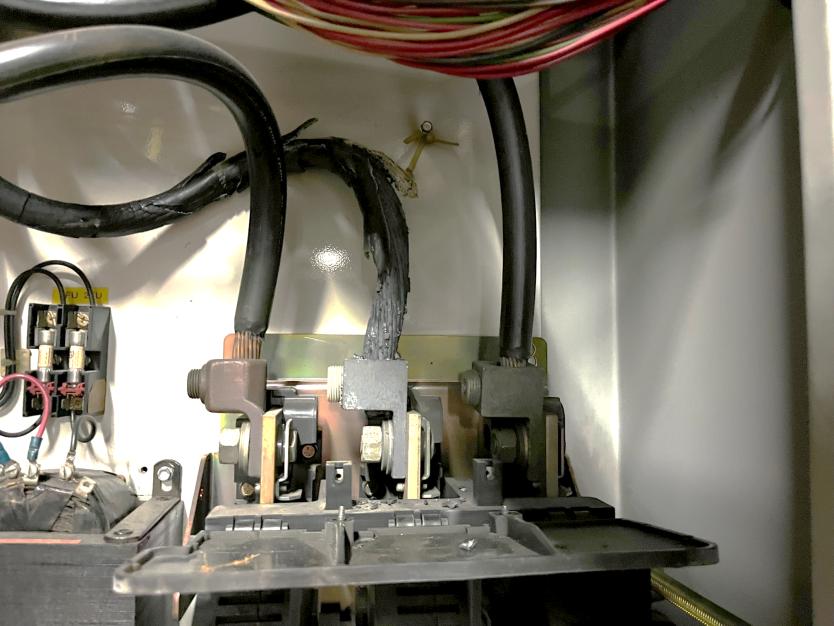
Visible damage
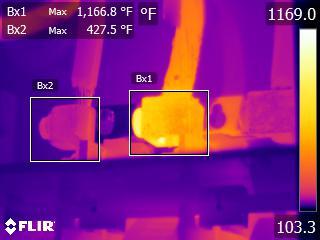
Thermal detection — 1,166°F hotspot
Actual client finding: thermal imaging detected this failure before catastrophic arc flash
What Is Infrared Thermography?
Infrared thermography is a non-contact, non-destructive diagnostic technology that detects and measures heat emitted from equipment surfaces. Every energized electrical component, every rotating mechanical system, and every building assembly radiates thermal energy. When something is wrong — a loose connection, an overloaded circuit, a failing bearing — it produces abnormal heat that an infrared camera can detect and document long before it becomes visible to the naked eye or causes a failure.
Invizions uses professional-grade FLIR and Fluke infrared cameras operated by Infraspection Institute Level II and Level III Certified Thermographers. This ensures every inspection meets the rigorous standards required for NFPA 70B compliance, insurance carrier requirements, and internal maintenance documentation.
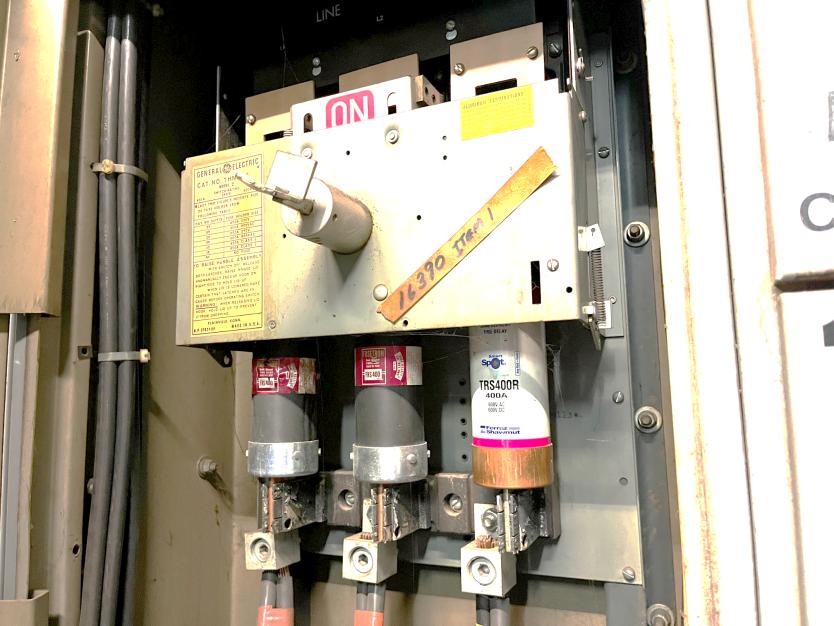
Visual inspection
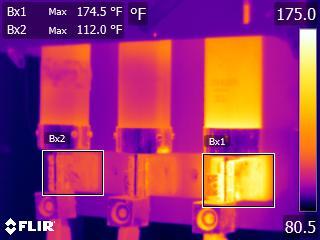
Thermal scan — 174°F hotspot
What you see vs. what thermal imaging reveals
Infrared Thermography Applications
From high-voltage substations to motor control centers, thermal imaging reveals problems across your electrical and mechanical systems before they cause failures.
Electrical System Inspections
Identify overloaded circuits, poor lead lug connections, poor fuse clip connections, pivot contact issues, failing fuses, unbalanced loads, and defective breakers in switchgear, motor control centers, distribution panels, disconnect panels, breaker panels, and service entrances. Electrical failures are the leading cause of industrial fires — thermal imaging is the most reliable early warning system available.
Mechanical Infrared Testing
Detect over-lubricated or under-lubricated bearings, misaligned shafts, failing couplings, and heat-generating friction in motors, pumps, compressors, conveyors, and power transmission systems. Catch mechanical degradation before it causes catastrophic failure.
High-Voltage & Switchgear Monitoring
Inspect live high-voltage equipment including switchgear, transformers, bus ducts, cables, and insulators without de-energizing. Our certified thermographers are trained and equipped to work safely around high-voltage systems. Supports NFPA 70B compliance for utility and energy clients.
Partial Discharge & Corona Detection
Partial discharge activity in switchgear, cable terminations, and insulators generates localized heat that precedes insulation breakdown. Thermal imaging combined with ultrasound detection identifies corona and partial discharge conditions in medium- and high-voltage equipment before they escalate to failure.
Refractory & Process Equipment
Inspect refractory linings in boilers, furnaces, kilns, and stoves for hot spots, delamination, and insulation degradation. Identify problems before they lead to structural failure or safety incidents.
How Thermography Catches Problems
These are real findings from Invizions client inspections. Thermal imaging reveals problems invisible to the naked eye — from critical failures to routine maintenance items.
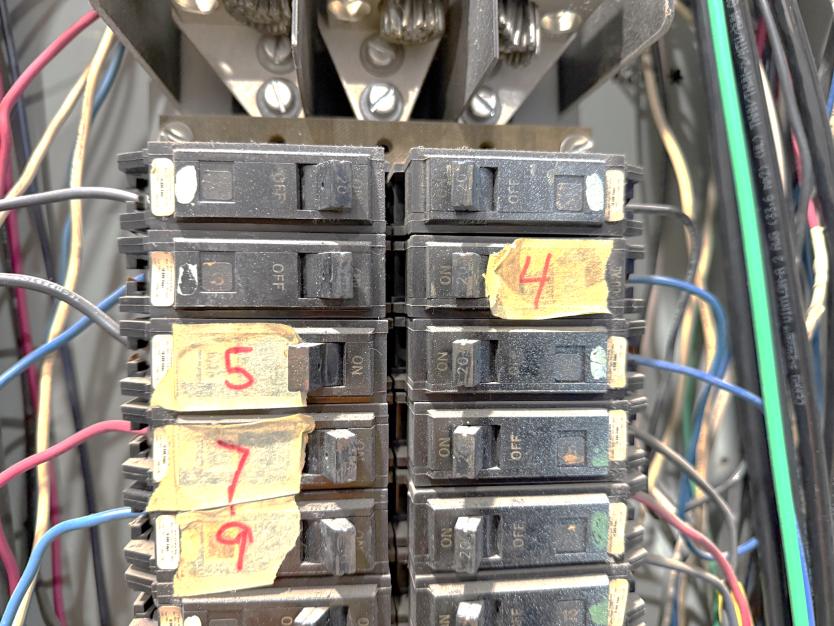
Breaker panel with field labels — real inspection conditions
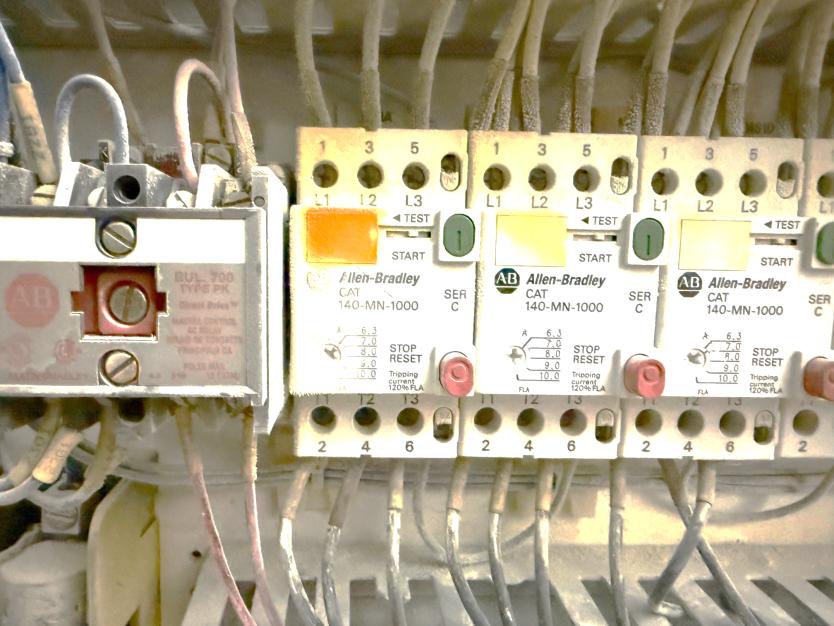
Allen-Bradley motor starters in MCC bucket
GE switch under load
174°F fuse hotspot
Priority 3 Finding — Monitor Continuously
A fuse running 62°F above ambient temperature indicates a developing connection problem. The visual inspection shows nothing unusual — the thermal scan reveals the issue before it progresses to failure. This finding falls in the 36–72°F band of the NETA Priority Criteria: monitor the condition continuously until corrective measures can be accomplished.
Priority 1 Finding — Warrants Investigation
Not every thermal anomaly requires immediate action. This fuse bank shows a mild 18°F temperature rise above ambient — a Priority 1 finding under the NETA Priority Criteria: a possible deficiency that warrants investigation. It should be documented and monitored over subsequent inspections, and if the delta-T increases over time it may warrant repair. Establishing thermal baselines on your first inspection makes future trending possible.
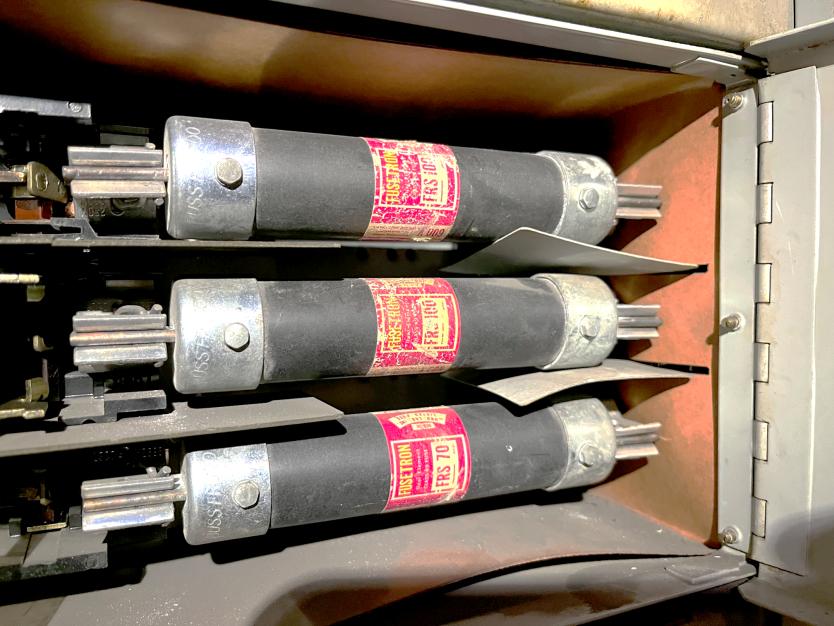
Fuse bank — routine inspection
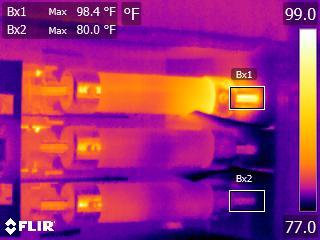
Thermal scan — 98°F elevated temp
NETA Priority Criteria
How We Prioritize Findings
Temperature Severity Ratings are objective and based on temperatures measured by the thermographer. Each exception is classified by delta-T — the temperature differential between the hottest area in the thermal image (labeled Box 1 in our reports) and a reference point on a similar, healthy component. That measured rise is compared against the NETA Priority Criteria for Electrical & Mechanical Exceptions to assign an objective repair priority.
Possible Deficiency
0 to 18°F rise
Possible deficiency that warrants investigation. Document and monitor/trend on subsequent inspections.
Example
98°F fuse bank — 18°F delta-T above ambient
Probable Deficiency
18 to 36°F rise
Indicates a probable deficiency; repair as time permits.
Example
Moderate delta-T — outage window repair
Serious / Developing
36 to 72°F rise
Monitor continuously until corrective measures can be accomplished.
Example
174°F fuse — 62°F delta-T above ambient
Critical / Severe
72°F rise & above
Indicates a major discrepancy; repair immediately.
Example
1,166°F bus failure — immediate shutdown required
The Invizions Inspection Process
01
Walk-Through & Inspection Route List
For new customers, we begin with an on-site walk-through of the facility to identify all equipment to be inspected — switchgear, motor control centers, distribution panels, disconnect panels, breaker panels, service entrances, transformers, and any other energized assets in scope. From that walk-through we build an inspection route list that drives the survey. We do not rely on single-line diagrams or pre-existing documentation; every route list is generated from what's actually in the field.
02
On-Site Thermal Survey
Certified thermographers conduct the inspection with calibrated infrared cameras under loaded conditions. Electrical equipment should be under at least 40% load for accurate results.
03
Data Analysis & Findings
All thermal images are analyzed against NFPA 70B and NETA severity criteria. Findings are classified by priority: Immediate Action, Routine Maintenance, or Monitor.
04
Written Inspection Report
You receive complete documentation of every exception — each abnormally warm or cool component — with calibrated thermal and visual images, delta-T temperatures, NETA severity ratings, and specific corrective action recommendations. The report uses a variety of data and ratings to help prioritize your repairs and give you the greatest return from your maintenance efforts, and it meets the Infraspection Institute's Guidelines for Infrared Inspection of Electrical and Mechanical Systems.
05
Follow-Up Support
We answer questions, assist with repair prioritization, and provide re-inspection services to verify that corrective actions resolved the identified issues.
Complete Infrared Testing Services
Our Approach: NFPA 70E-Compliant Procedures
Infrared thermography is inherently a safer inspection method — we scan energized equipment from a safe distance without removing covers or entering arc flash boundaries. But when access to electrical compartments is required, our technicians follow NFPA 70E work practices including remote racking tools, proper PPE, and established approach boundaries.
The image shown demonstrates remote breaker racking using an extension tool, keeping the operator outside the arc flash hazard zone while energizing or de-energizing equipment. This is standard procedure for our team when working near energized systems rated above 50V.
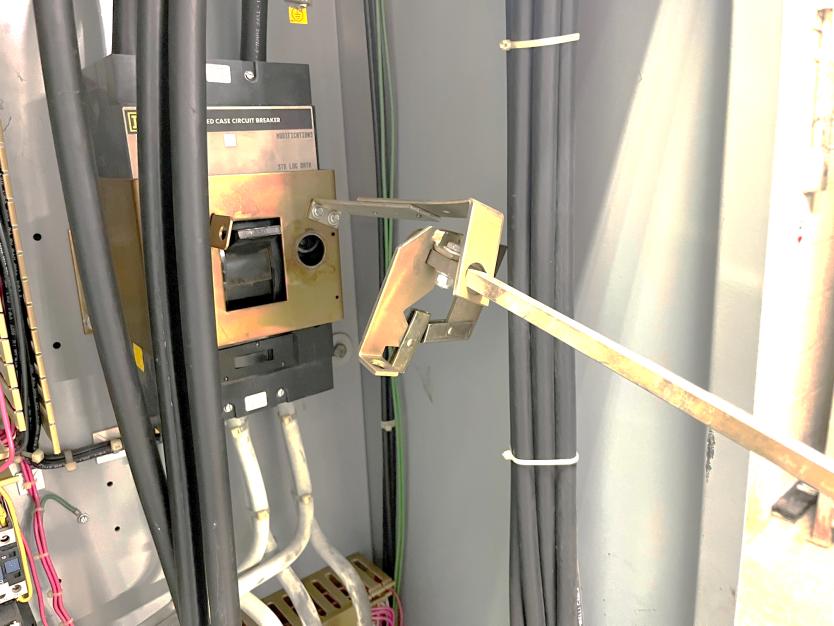
Remote racking — NFPA 70E compliant procedures
Infrared Inspections Are a Core NFPA 70B Requirement
The 2023 mandatory NFPA 70B standard explicitly requires regular infrared thermography inspections of electrical distribution equipment as part of a documented Electrical Maintenance Program. Annual or more-frequent thermal imaging surveys are considered a baseline maintenance practice — not an optional add-on.
Learn About NFPA 70B ComplianceWhy Choose Invizions for Infrared Inspections?
Level III Certified Thermographers
Rodney Scott's Infraspection Level III certification (No. 4974) represents the highest credential in the field.
FLIR & Fluke Equipment
We use professional-grade cameras calibrated to NIST traceable standards.
NFPA 70B-Formatted Reports
Every report is structured to satisfy compliance documentation requirements.
Instructor-Level Expertise
As an Infraspection Institute instructor, Rodney doesn't just follow standards — he teaches them.
Schedule Your Infrared Inspection Today
Most facilities can be inspected with minimal disruption to operations. Contact us to discuss your facility's needs and receive a customized inspection proposal.